Concepts
System Architecture
Overview
Ananke Plexus follows a core + ports + adapters hexagonal architecture. The stable center contains Ananke’s governance semantics. External tooling remains fully replaceable.
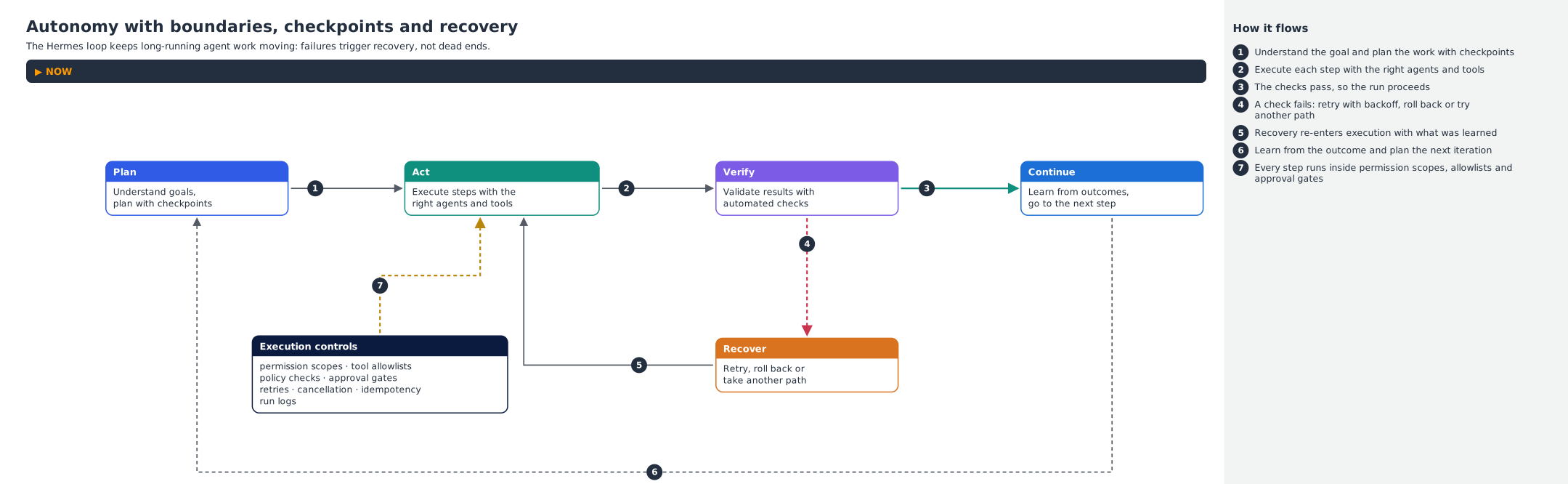
flowchart TB
    subgraph Entry["👤 Entrypoints"]
        CLI["⌨️ ananke CLI"]
        APMCLI["📦 apm CLI"]
        HOOKS["🪝 Git Hooks"]
        MCP["🔌 MCP Clients"]
        CI["⚙️ CI/CD"]
    end

    subgraph Core["⚖️ Ananke Core"]
        CONFIG["⚙️ Config"]
        POLICY["🛡️ Policy Engine"]
        EXEC["🤖 Execution Director"]
        EVENTS["📡 Event Bus"]
        TELEMETRY["📊 Telemetry"]
        PERM["🔐 Permissions"]
        STATE["🔁 Run State Machine"]
    end

    subgraph Domain["🧠 Domain Subsystems"]
        SPEC["📜 Spec / BMAD"]
        CALM["🏗️ CALM Architecture"]
        GRAPH["🕸️ Graph Intelligence"]
        APM["📦 APM"]
        REGISTRY["🗂️ Skill & Agent Registry"]
        GATES["🧪 Verification Gates"]
        EVIDENCE["🧾 Evidence"]
    end

    subgraph Adapters["🔌 Adapters"]
        JIRA["Jira"]
        SCM["GitHub / Bitbucket"]
        GRAPHIFY["Graphifyy"]
        CRG["Code Review Graph"]
        COPILOT["Copilot"]
        Q["Amazon Q"]
        KIRO["Kiro"]
        HERMES["Hermes"]
    end

    Entry --> Core
    Core --> Domain
    Domain --> Adapters
    Adapters -. Results .-> Domain
Package layout
ananke-plexus/
└── src/ananke/plexus/
    ├── cli/            — Typer CLI entrypoints (ananke + apm)
    ├── core/           — IDs, result types, path helpers, workflow audit
    ├── config/         — Config models, loader, migration, secrets resolver
    ├── contracts/      — BMAD compiler: behavior, model, architecture
    ├── specs/          — Spec models, service, providers, lock, drift
    ├── architecture/   — CALM loader, validation, delta, Mermaid rendering
    ├── graph/          — Canonical graph models, providers (native/Graphifyy/CRG)
    ├── policy/         — Policy engine, rule schema, builtin packs
    ├── gates/          — Gate runner, adapters (ruff, mypy, pytest, semgrep...)
    ├── execution/      — Plan DAG, scheduler, checkpoint, approvals, compensation
    ├── backends/       — AgentBackend protocol, Copilot/Q/Kiro/Hermes/fake adapters
    ├── lifecycle/      — Git service, worktrees, Jira, Bitbucket, PR evidence
    ├── hooks/          — Git hook manager, stages, runner
    ├── mcp/            — MCP server, tools, resources, prompts, auth
    ├── apm/            — Skill manifests, registry, installer, sandbox, lockfile
    ├── evidence/       — Evidence bundle, SARIF 2.1.0, hash, retention (+ registry capability snapshot)
    ├── registry/       — Skill & Agent Registry: SQLite + content-addressed store, importers,
    │                     resolver, ananke.lock, activation, docs generator, HTTP server
    ├── evals/          — Enterprise evaluation harness: traces, evaluators, judges, regression
    ├── testing/        — Unified test & quality harness: adapters, profiles, quality gate
    ├── events/         — In-process event bus with JSONL audit log
    ├── telemetry/      — OpenTelemetry adapter, noop
    └── plugins/        — Entry-point discovery, plugin metadata
Design principles
Local-first
Code, specs, graph state, verification, and evidence can remain entirely local. No hosted service is required.
Ports and adapters
Every external integration is isolated behind a protocol/interface:
GraphProvider  →  NativeGraphProvider | GraphifyyAdapter | CodeReviewGraphAdapter
AgentBackend   →  CopilotBackend | AmazonQBackend | KiroBackend | HermesBackend | FakeBackend
SCMPort        →  BitbucketAdapter | GitHubAdapter
IssuePort      →  JiraAdapter
ScannerPort    →  RuffAdapter | SemgrepAdapter | GitleaksAdapter | TrivyAdapter
Immutable, content-addressed capabilities
Skills and agents live in the registry: every version is an immutable, hash-verified payload; mutable state (trust, channel, lifecycle) is separate and audited. Resolution is deterministic, policy-aware and explainable, and produces a reproducible ananke.lock.
Fail closed for hard gates
When a configured hard gate cannot execute, the default result is BLOCKED, not “pass.”
Soft gates return: PASS | WARN | SKIPPED | UNAVAILABLE
Hard gates return: PASS | BLOCKED | ERROR
Evidence before mutation
Every mutating step records:
- Requested intent
- Policy decision
- Preconditions
- Execution result
- Verification result
- Artifact hashes
- Audit record
Capability discovery
Every backend declares a BackendCapabilities model. The orchestrator asks the registry for capabilities and constructs a compatible execution plan.
Configuration precedence
Highest wins:
- CLI flags (
--project,--offline,--json) - Process environment variables
.ananke/config.local.toml.ananke/config.toml- User config
- Built-in defaults
Event system
Every subsystem emits typed domain events to an in-process event bus. Events are appended to .ananke/evidence/*.jsonl for audit trails.
Registry events (artifact.registered, artifact.promoted, artifact.yanked, artifact.quarantined, …) are also written to an append-only registry_events table.
Key events: RequirementCaptured, SpecCreated, SpecLocked, GateCompleted, BackendInvoked, PullRequestCreated, EvidenceFinalized, ApprovalRequested, ApprovalGranted
Exit codes
| Code | Meaning |
|---|---|
| 0 | success |
| 1 | generic failure |
| 2 | invalid usage/config |
| 3 | policy blocked |
| 4 | verification failed |
| 5 | dependency/tool unavailable |
| 6 | integration failure |
| 7 | authentication/authorization |
| 8 | spec drift |
| 9 | architecture violation |
| 10 | cancelled |